


Microcrystalline Cellulose (MCC)
What is Microcrystalline Cellulose?
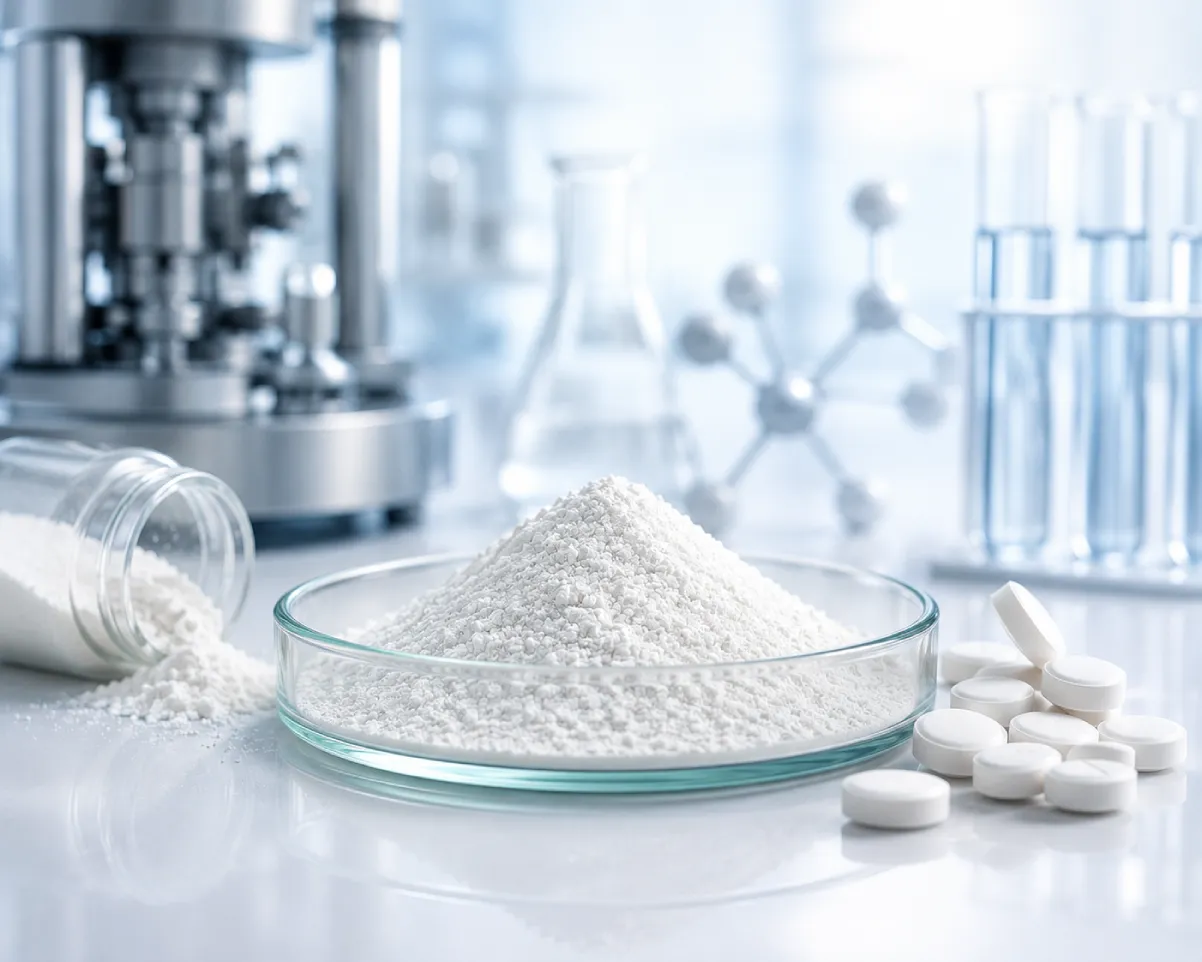
Microcrystalline Cellulose, commonly known as MCC, is a widely used pharmaceutical excipient for solid dosage formulations such as tablets and capsules.
MCC is mainly used as a binder, filler, diluent, and disintegrating support excipient in pharmaceutical and nutraceutical formulations. It is valued for its good compressibility, powder flow improvement, water absorption, and disintegration-supporting properties.
In tablet manufacturing, MCC helps improve formulation performance during direct compression, wet granulation, rotary tablet pressing, high-speed tablet manufacturing, and capsule filling.
We represent
Huzhou City Linghu Xinwang Chemical Co., Ltd. is a high-tech enterprise specializing in the research, development, production, and sales of pharmaceutical excipients, food additives, and specialty ingredients. Established in 2000 and located in Zhejiang Province, China, the company combines technical expertise with advanced manufacturing capabilities.
Its portfolio includes pharmaceutical excipients and formulation ingredients that support diverse industry applications. Backed by ISO 9001 and ISO 22000 certifications, Linghu Xinwang focuses on quality, innovation, and continuous product development to meet evolving market requirements. More Info
KP Manish represents MCC present across : China
MCC is certified with : Halal ,Kosher, ISO 9001,ISO22000 , Nitrosamine free
Products offered are : MCC pH Series , XC Series, XT Series ,HD Series, SMC Series

Applications areas of MCC
MCC is a versatile excipient used in a wide range of pharmaceutical and nutraceutical applications.
| Segment | Application |
|---|---|
| Direct Compression | Direct compression tablets |
| Granulation | Wet granulation formulations, Dry granulation formulations |
| Tablet Manufacturing | Rotary tablet pressing, High-speed tablet manufacturing |
| Specialized Tablets | Buccal tablets, Chewable tablets |
| Sensitive Formulations | Multiple-dose tablet formulation, Low-dose tablet formulation |
| Suspensions | Suspensions and dry suspensions |
| Nutraceuticals | Nutraceutical tablets and capsules |
MCC acts as a filler, binder, diluent and flow-support excipient, helping to improve compressibility, flowability, disintegration and overall formulation performance.
Benefits of MCC
- Excellent Binding Capability
- Superior Compression Performance
- Enhanced Powder Flow Properties
- Improved Content & Weight Uniformity
- Reliable Disintegration Support
Specifications
MCC PH Series (Standard Direct Compression Grades)
| Grade | Moisture | D50 | Key Feature |
|---|---|---|---|
| PH-101 | ≤7.0% | 50 µm | Standard grade for wet granulation, rotary tablet pressing and pill making |
| PH-102 | ≤7.0% | 100 µm | Larger particle size, suitable for direct compression with good flowability and compressibility |
| PH-200 | ≤7.0% | 200 µm | Large particle size, suitable for high-speed tablet press and tablet weight control |
| PH-112 | ≤0.8% | 100 µm | Low-moisture PH-102 type for water-sensitive medicine |
MCC XC Series (Low Lubrication grades)
| Grade | Moisture | Bulk Density | D50 | Key Feature |
|---|---|---|---|---|
| XC-802 | ≤7.0% | 0.18–0.30 g/cm³ | 50 µm | High-performance excipient with formability about twice that of PH type |
| XC-1000 | ≤7.0% | 0.10–0.35 g/cm³ | 50 µm | Excellent formability, small dosage can meet tablet hardness requirements |
MCC XT Series( High Compressibility Grades)
| Grade | Moisture | Bulk Density | D50 | Key Feature |
|---|---|---|---|---|
| XT-711 | ≤7.0% | 0.20–0.26 g/cm³ | 50 µm | Combination of high formability and high flowability |
| XT-702 | ≤7.0% | 0.26–0.32 g/cm³ | 100 µm | Best fluidity with good formability |
MCC HD Series(High Density Grades)
| Grade | Moisture | Bulk Density | D50 | Key Feature |
|---|---|---|---|---|
| HD-401 | ≤7.0% | 0.45–0.65 g/cm³ | 50 µm | Based on MCC 301, the bulk density was increased to improve powder fluidity. |
| HD-402 | ≤7.0% | 0.45–0.65 g/cm³ | 100 µm | Based on MCC 302, the bulk density was increased to further improve powder fluidity. |
SMCC Series(Silicified MCC Grades)
| Grade | Moisture | Bulk Density | Particle Size | Key Feature |
|---|---|---|---|---|
| SMCC 50 | ≤ 6.0% | 0.25 – 0.37 g/cm³ | 50 µm | Suitable for formulations requiring high tablet hardness and good flowability |
| SMCC 90 | ≤ 6.0% | 0.25 – 0.37 g/cm³ | 100 µm | Suitable for formulations requiring uniform flow and compaction |
| SMCC 90HD | ≤ 6.0% | 0.38 – 0.50 g/cm³ | 100 µm | Provides excellent flowability and firmness with fast disintegration time |
| SMCC 90LM | ≤ 1.5% | 0.27 – 0.39 g/cm³ | 100 µm | Similar to SMCC 90, but with lower moisture content (<1.5%) |
